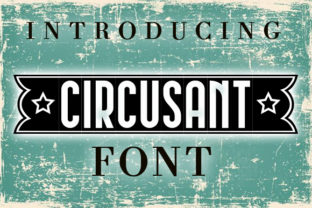
Circusant: A Beautiful Retro Font for Real Projects
Circusant isn’t just another decorative typeface—it’s a carefully crafted retro font with warmth, rhythm, and quiet confidence. Its letterforms echo mid-century signage and hand-painted shop fronts: soft curves, gentle contrast, and subtle irregularities that feel human—not algorithmic. It’s not overly ornate, nor is it sterile. That balance makes Circusant unusually versatile for people who need personality *and* clarity in their text.
Why “retro” matters—and why it’s more than nostalgia
Retro design language resonates differently depending on your role and goals. For a small bakery owner, Circusant might evoke trust and local charm—think chalkboard menus or packaging that feels handmade but polished. For a UX designer prototyping a playful app interface, its legibility at medium sizes and friendly proportions help signal approachability without sacrificing readability. And for an educator building classroom posters or digital lesson slides, Circusant adds visual interest that supports memory and engagement—especially for younger learners or neurodiverse students who respond well to distinct, consistent shapes.
What sets Circusant apart from many retro fonts is its functional foundation. It includes full Latin character support, thoughtful punctuation, and OpenType features like stylistic alternates and ligatures—so it scales gracefully from a social media story caption to a printed zine cover.
Beginners and hobbyists
If you’re just starting out with design tools—or even using free platforms like Canva or Google Slides—you’ll appreciate how Circusant works without needing technical know-how. Upload it once, and it behaves predictably across headings, quotes, and short blocks of text. No kerning adjustments required for basic use. Try pairing it with a clean sans-serif (like Inter or Lato) for contrast: Circusant for titles, the sans for body text. That combo instantly elevates newsletters, Instagram graphics, or personal project websites—even if you’ve never opened Adobe Illustrator.
Freelancers and creatives
For designers, illustrators, or lettering artists, Circusant serves as both inspiration and utility. Its structure reveals how weight distribution and spacing affect tone—making it a quiet teacher for those refining their typographic eye. You might use it as a base layer in a custom logotype, then tweak individual letters by hand. Or layer it behind a watercolor texture for album art or book covers. Because it’s not over-designed, it leaves room for your voice to come through—rather than competing with it.
Bloggers and content creators
Readers scroll fast. Circusant helps your headlines stop them—not by shouting, but by offering visual warmth and familiarity. A travel blogger might use it for destination titles (“Lisbon • 1964”) to suggest timelessness; a wellness writer could apply it to section dividers or quote callouts to soften tone without losing authority. Importantly, Circusant renders well on screens at 24px and up, and its x-height ensures characters remain distinct even on mobile—no squinting required.
Educators and nonprofit communicators
In learning materials, typography supports comprehension—not just aesthetics. Circusant’s open counters (the enclosed spaces inside letters like ‘a’, ‘e’, and ‘o’) and generous spacing reduce visual crowding, which benefits readers with dyslexia or low vision. Teachers have used it successfully in printable flashcards, bilingual vocabulary sheets, and presentation decks where clarity matters more than trendiness. For community organizations, it lends sincerity to flyers and donor updates—avoiding the coldness of corporate fonts while staying professional.
What to weigh before choosing Circusant
No font fits every situation—and that’s okay. Here’s how to decide if Circusant aligns with your actual needs:
- Ease of use: If you need something that installs cleanly and works across platforms (Mac, Windows, web via @font-face), Circusant delivers without configuration headaches.
- Quality vs. cost: It’s not free—but it’s priced accessibly for individuals and small teams. You’re paying for considered spacing, tested rendering, and licensing that covers commercial use (including client work and merchandise), not just downloads.
- Flexibility: While not a variable font, Circusant offers regular and bold weights plus matching italics. That’s enough range for most editorial, branding, or promotional work—without overwhelming choice.
- Presentation context: It shines in print, signage, and screen-based displays where tone matters—less so in dense data tables or legal disclaimers where neutrality is key.
- Long-term usefulness: Because it avoids extreme trends (no distressed edges, no forced glitch effects), Circusant won’t look dated in two years. It’s built to age like good stationery: quietly confident, not flashy.
Real examples—no guesswork needed
A freelance photographer uses Circusant for her website’s “About” page headline and photo captions—pairing it with a light serif for bios. The result feels personal but intentional, helping clients sense her artistic voice before seeing a single image.
A science teacher creates a set of illustrated anatomy flashcards. She sets organ names in Circusant (size 28pt, bold) against a muted background. Students report remembering terms better—likely due to the font’s distinct letter shapes reinforcing visual recognition.
A podcast host designs limited-run enamel pins for supporters. The show’s tagline—“Curious, Not Certain”—appears in Circusant on each pin. Its rounded terminals and balanced spacing translate beautifully into metal, avoiding thin strokes that might break during production.
Who might pause before using Circusant?
It’s not ideal for interfaces requiring rapid scanning (like dashboards or banking apps), nor for long-form body text at small sizes (below 16pt). If your brand voice leans strictly minimalist, high-tech, or aggressively modern, Circusant’s warmth may soften your message more than intended. And if you need extensive language support beyond Western European languages, check the glyph set first—some extended diacritics or Cyrillic variants may not be included.
That said, those limitations aren’t flaws—they’re boundaries that clarify where Circusant excels. It’s designed for moments where typography carries feeling, not just information.
Final thought: Type is a tool—and Circusant is one that listens
You don’t need to be a typographer to benefit from thoughtful type. Circusant meets people where they are: whether you’re drafting your first blog post, designing a wedding invitation, updating your studio’s brand guidelines, or printing a batch of workshop handouts. It asks little of you—yet gives back in tone, cohesion, and quiet distinction. When your goal is to communicate with care—not just clarity—Circusant doesn’t shout. It leans in.