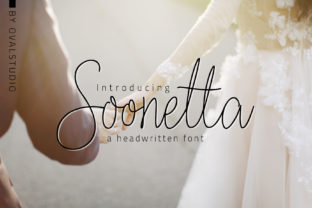
Soonetta Script: A Cool, Beautiful Font for Real Projects
Soonetta Script isn’t just another script font—it’s a quietly confident choice that balances elegance with approachability. Designed with subtle contrast, soft terminals, and a natural rhythm, it feels hand-drawn without sacrificing legibility or versatility. It’s the kind of typeface that works as well on a small business Instagram story as it does on a boutique wedding invitation—or even a teacher’s classroom poster. Its “cool” factor comes not from trend-chasing, but from thoughtful construction: relaxed curves, consistent spacing, and a warmth that reads as human—not algorithmic.
What Makes Soonetta Script Stand Out
Unlike many script fonts that lean heavily into formal calligraphy or exaggerated bounce, Soonetta Script occupies a grounded middle ground. Its lowercase letters flow with gentle momentum, while capitals offer presence without dominance. The spacing is open enough for readability at smaller sizes—crucial for digital use—and its weight holds up cleanly in both print and screen environments.
It’s also highly functional for non-designers. You don’t need advanced typography knowledge to use it well. A single weight (with optional alternate characters) means fewer decisions, less clutter, and faster iteration—especially valuable when you’re balancing design with content, strategy, or client deadlines.
Creative Uses That Actually Work
Here’s where Soonetta Script shines—not in theory, but in real-world application:
- Small business branding: A local coffee roaster used it for their bag labels and website hero text. Paired with a clean sans-serif (like Inter or Poppins) for body copy, it gave them warmth and distinction without looking dated or overly ornate.
- Educational materials: A homeschooling educator incorporated it into printable worksheets and lesson headers. Students responded more positively to assignments that felt inviting—not sterile—and the font remained clear even when photocopied.
- Digital content: Bloggers and newsletter writers apply it selectively—only for headlines, section dividers, or quote callouts. Used this way, it adds visual breathing room and emotional tone without slowing down reading speed.
- Product packaging: A handmade soap maker paired Soonetta Script with minimalist layout and earthy tones. The font conveyed care and craftsmanship—key values for her audience—without needing illustration or extra graphic elements.
How to Use It Without Overdoing It
Script fonts can easily tip into “too much”—distracting, hard to scan, or unintentionally kitschy. With Soonetta Script, restraint is your best collaborator. Try these practical guardrails:
- Limit it to one visual role per layout: If it’s your headline font, don’t also use it for captions or buttons. Consistency builds recognition; repetition dilutes impact.
- Test contrast early: On light backgrounds, pair it with a dark, high-contrast sans-serif. On dark backgrounds, use a light or medium-weight sans to maintain hierarchy and accessibility.
- Avoid all-caps settings: Its charm lives in word shape and rhythm—not uniform letterforms. All-caps breaks its natural flow and reduces legibility.
- Respect line length: Keep headings under 6–8 words. Longer phrases lose clarity quickly in script faces—even graceful ones like Soonetta Script.
Adapting for Different Audiences and Platforms
One size doesn’t fit all—but Soonetta Script adapts gracefully when you match its use to context and audience expectations.
For marketers and solopreneurs: Use it in email subject lines (sparingly) or landing page banners where tone matters more than dense information. A fitness coach, for example, used it for a “Your Journey Starts Here” banner—softening the message while keeping it action-oriented.
For educators and creators: Apply it to slide titles, worksheet headers, or digital course modules. It signals intentionality—not “fun for fun’s sake,” but “this matters, and I made space for it.” One language tutor used it for vocabulary cards, pairing each word with a simple icon. Students remembered terms better—not because of the font alone, but because the visual treatment reinforced attention and care.
For publishers and bloggers: Reserve it for pull quotes, chapter openers, or signature sections (like “Reader Notes” or “Try This”). That way, it becomes a quiet signature—not background noise. A food writer uses it only for recipe titles, letting ingredient lists and instructions stay neutral and scannable.
Keeping It Original—Without Reinventing the Wheel
You don’t need custom ligatures or complex alternates to make Soonetta Script feel fresh. Originality comes from how you combine it—not how you distort it.
Try pairing it with unexpected textures: a light linen background in print, subtle grain overlays in digital mockups, or muted watercolor accents. Or shift emphasis through scale: set a headline large and airy, then follow with tight, justified body text. That contrast—not the font itself—creates distinction.
If you’re building a brand system, define clear usage rules early: “Soonetta Script = Headlines only. Always paired with [X sans-serif] at 16px minimum for body.” That kind of specificity prevents drift and saves time during revisions.
Where to Start—Practically
You don’t need a full design suite to begin. Start small:
- Open Canva or Google Slides and swap your current heading font for Soonetta Script. Adjust size and spacing—notice how much more intentional it feels.
- In your next newsletter draft, apply it to just one subhead—and leave everything else unchanged. See if readers pause there longer.
- Print a sample label or card using it alongside your usual sans-serif. Hold it at arm’s length: Does the hierarchy hold? Does it feel cohesive—not clever for cleverness’ sake?
Then iterate. Try it with different colors, weights, or layouts—not to chase perfection, but to learn what resonates with your voice and your audience.
Soonetta Script won’t solve every design challenge. But it does something quietly powerful: it helps ideas land with clarity and warmth. That’s rare. And when used with purpose—not just aesthetics—it becomes more than a font. It becomes part of how your work is understood, remembered, and trusted.