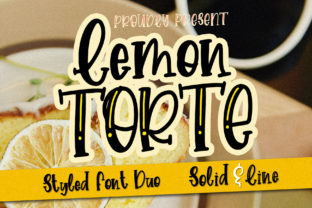
Lemon Torte: A Sweet, Handwritten Font for Real Projects
There’s a quiet power in handwriting — the warmth of a personal note, the charm of a hand-lettered menu, the sincerity of a signature on an invitation. Lemon Torte captures that feeling in type: a lovely and charming handwritten font that celebrates all things sweet — not just desserts, but connection, care, and creativity. It’s not overly cursive or fussy; it’s approachable, rhythmic, and full of gentle personality. For professionals who rely on visual tone as much as content, Lemon Torte isn’t just another font — it’s a subtle but effective tool for human-centered communication.
Why Handwriting Still Matters — Especially in Digital Spaces
In a world saturated with clean sans-serifs and algorithmically optimized UIs, handwritten fonts like Lemon Torte offer something rare: authenticity with intention. They signal thoughtfulness — whether you’re designing a boutique bakery’s Instagram story, drafting a heartfelt email campaign for a wellness coach, or crafting packaging for a small-batch candle line. Lemon Torte doesn’t shout; it leans in. Its soft baseline sways, its letterforms have just enough variation to feel alive (but not chaotic), and its spacing invites readability without sacrificing character.
This matters most when your audience is scanning quickly but deciding deeply — like a parent choosing a children’s book illustrator, a bride reviewing wedding stationery vendors, or a teacher selecting classroom resources that feel warm and inclusive. Lemon Torte supports those decisions by reinforcing tone before a single word is read.
Where Lemon Torte Fits Best — And Where It Doesn’t
Lemon Torte shines in contexts where warmth, approachability, and artisanal sensibility align with your goals. Think:
- Branding for small businesses — especially food, lifestyle, education, or self-care niches. A local jam maker using Lemon Torte on jar labels adds tactile charm without looking dated.
- Digital storytelling — blog headers, newsletter banners, or Canva social templates where you want contrast against neutral body text (e.g., pairing Lemon Torte headlines with Inter or Open Sans).
- Printed materials with emotional weight — graduation announcements, baby shower invites, thank-you cards, or handmade product tags.
- Educational resources — worksheets, reading logs, or classroom posters designed to feel inviting rather than institutional.
It’s less suited for long-form body copy, data-heavy dashboards, or technical documentation — not because it’s “bad,” but because its expressive nature prioritizes mood over speed of parsing. If your goal is rapid information absorption (like safety instructions or legal disclaimers), stick with highly legible, neutral fonts. Lemon Torte works best when it’s given room to breathe — as a headline, accent, or focal point — not as workhorse text.
Practical Pairing Tips That Actually Work
Pairing Lemon Torte well isn’t about rules — it’s about rhythm and contrast. Start with these real-world pairings that designers and small business owners consistently report success with:
- With a warm, low-contrast sans-serif — like Quicksand or Nunito. These share Lemon Torte’s friendliness but anchor it with structure. Ideal for websites where you want friendly navigation and expressive section headers.
- With a crisp, high-x-height serif — such as Playfair Display (light or regular weight). This creates elegant hierarchy: Lemon Torte for titles, Playfair for subheads and body. Works beautifully for editorial newsletters or boutique e-commerce sites.
- With neutral monospaced or geometric fonts — like IBM Plex Mono or Space Grotesk. The juxtaposition feels intentional and contemporary — great for creative studios wanting to balance craft and clarity.
Avoid pairing Lemon Torte with other highly decorative scripts or ultra-thin fonts — the result can feel cluttered or fragile. Also, skip using it at very small sizes (<14px) on screen; its charm lives in its details, which need breathing room.
Real Time Savings — Yes, Really
Here’s what many users don’t expect: Lemon Torte can save time. Not in the way a template does, but by reducing decision fatigue. When you’re choosing fonts for a new project — say, rebranding a yoga studio’s website — having one go-to expressive font that reliably conveys calm, care, and craftsmanship means fewer rounds of client feedback asking, “Can it feel more personal?” or “Make it warmer.” Lemon Torte answers those questions before they’re asked.
One freelance educator told us she uses Lemon Torte for all her printable mindfulness guides. Because clients instantly recognize the tone — nurturing, unhurried, grounded — she spends less time justifying design choices and more time refining content. That’s efficiency rooted in consistency, not shortcuts.
Who Benefits Most — And Why It’s Worth Considering Now
Lemon Torte resonates most strongly with creators who value emotional resonance alongside practicality: bloggers writing about slow living, small business owners building community-focused brands, educators designing inclusive learning tools, and freelancers who serve clients in wellness, food, parenting, or creative fields. It’s also quietly powerful for neurodiverse communicators — its open shapes and generous spacing support readability while retaining expressive nuance.
That said, it’s not universally ideal. If your brand voice leans into bold authority (think fintech or enterprise SaaS), Lemon Torte may soften your message more than intended. Likewise, if you’re working within strict brand guidelines that mandate specific type families, it may sit outside compliance — and that’s okay. Fonts are tools, not mandates. The value lies in knowing when Lemon Torte fits, and when another option serves your purpose better.
A Thoughtful Note on Licensing and Use
Lemon Torte is typically offered under clear, straightforward licenses — often with separate options for personal, commercial, and web use. Before downloading or embedding, check the source (e.g., Google Fonts, independent foundries, or marketplaces like Creative Market) to confirm usage rights match your needs. For example, using it in a client’s logo usually requires a desktop license, while serving it via CSS on a live site may require a web font license. Taking five minutes to verify avoids downstream complications — especially important for freelancers and agencies managing multiple clients.
Also worth noting: Lemon Torte includes standard Latin characters and basic punctuation, but doesn’t cover extended language sets (e.g., Cyrillic or Vietnamese diacritics). If your audience spans multilingual regions, test coverage early — or consider pairing it with a robust supporting font that fills those gaps.
Final Thought: Sweetness With Substance
“Celebrates all things sweet” isn’t just poetic phrasing — it reflects Lemon Torte’s core strength: adding warmth without saccharine excess. It’s playful but not childish, elegant but not distant, handmade but not messy. In a landscape where attention is fragmented and trust is earned through tone as much as truth, having a font that communicates care at first glance is quietly strategic. Whether you’re typing a recipe card, designing a workshop flyer, or launching a new product line, Lemon Torte offers a simple, human-centered way to say: This matters. You matter. Let’s begin gently.