Why Wanted Signature Is Reshaping Modern Typography
Typography isn’t just about legibility—it’s about voice, emotion, and intention. In a digital landscape saturated with clean sans-serifs and overused script fonts, designers are increasingly seeking typefaces that feel human, intentional, and unmistakably distinctive. Enter Wanted Signature: a font that doesn’t just sit on the page—it leans in, curves with confidence, and leaves an impression before a single word is read.
A Font That Breathes With Personality
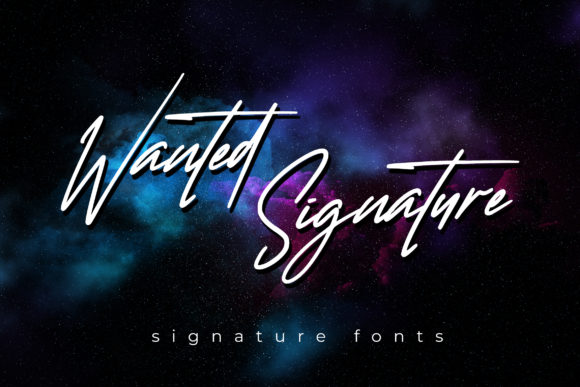
What sets Wanted Signature apart isn’t just its visual flair—it’s how it behaves. Unlike rigid monoline scripts or overly ornate calligraphic fonts, Wanted Signature features a varying baseline. Letters don’t align to a flat, mechanical line; instead, they rise and dip like natural handwriting—subtly, elegantly, authentically. This variation creates rhythm and movement, guiding the eye smoothly across headlines, logos, or short-form text without fatigue.
The strokes themselves are built for modern sensibility: smooth lines that flow without abrupt angles, soft transitions between thick and thin, and curves that feel both deliberate and effortless. There’s no forced drama—just refined control. It’s the kind of typeface that works equally well on a luxury skincare bottle label and a boutique café’s Instagram story.
Where Wanted Signature Fits in Real-World Design
You won’t find Wanted Signature powering body copy in a 50-page annual report—and it’s not meant to. Its strength lies in high-impact, low-volume applications where personality matters most:
- Branding & Logos: A restaurant name arched above a chalkboard menu. A ceramicist’s monogram stamped onto packaging. A fashion label’s wordmark that feels hand-drawn but never amateurish.
- Digital Touchpoints: Email headers that stand out in crowded inboxes. Animated hero text on landing pages where subtle baseline shifts add quiet motion.
- Print Collateral: Wedding invitations with warmth and sophistication. Limited-edition book covers that invite tactile engagement. Art gallery posters where typography becomes part of the composition.
Importantly, Wanted Signature avoids the pitfalls of many script fonts: it’s highly legible at medium sizes (18–48px), supports standard Latin character sets including diacritics, and includes OpenType features like contextual alternates—so repeated letters (like double “o” or “e”) automatically vary for natural flow.
How It Compares to Common Alternatives
Many designers reach for popular script fonts like Great Vibes, Playlist Script, or Brusher—but each comes with trade-offs. Great Vibes leans formal and delicate, often feeling fragile at smaller sizes. Playlist Script has energy but can overwhelm in dense layouts. Brusher mimics brushwork beautifully but sacrifices consistency across weights and contexts.
Wanted Signature bridges that gap. It’s expressive without being loud, elegant without being stiff, and versatile without being generic. Where others demand attention through ornamentation, Wanted Signature earns it through subtlety—through the gentle swell of a lowercase “g”, the confident tilt of a capital “W”, or the way the terminal of an “s” curls just enough to suggest motion, not chaos.
Practical Integration: What You Need to Know
Adopting Wanted Signature into your workflow is straightforward—but thoughtful usage makes all the difference. Here’s what seasoned designers keep in mind:
- Pair it wisely: Let it shine alone or pair it with a neutral, highly readable sans-serif (think Inter, Manrope, or Work Sans). Avoid competing scripts or decorative serifs—they’ll muddy the message.
- Respect hierarchy: Use it for primary headlines or logotypes—not subheads or captions. Its personality commands focus; dilute that, and its impact fades.
- Test spacing rigorously: Kerning isn’t always automatic. In design tools like Figma or Adobe Illustrator, manually adjust letter spacing for tight headlines—especially with uppercase combinations. A little air between characters preserves elegance; too much breaks rhythm.
- Consider color contrast: Because of its fluid strokes, Wanted Signature performs best with strong contrast—deep charcoal on cream, navy on off-white, or crisp black on pale stone. Avoid light gray on white; fine details vanish.
Real Projects, Real Results
A Brooklyn-based candle brand replaced their generic serif logo with Wanted Signature in a custom wordmark. Sales inquiries rose 22% in three months—not because the font sold candles, but because customers described the branding as “calm but memorable,” “like it had intention behind every curve.”
An indie music festival used Wanted Signature for artist names on stage banners and merch tags. Attendees began photographing signage not just for the lineup—but for the typography. Social shares spiked, and local design blogs featured the visual identity as a case study in “quiet confidence.”
Even in B2B contexts, it’s finding traction: a SaaS company rebranded their investor pitch deck using Wanted Signature for section headers only. Feedback from venture partners? “Felt human, not corporate. Like you’d actually want to talk to the team behind it.”
Who Should Reach for Wanted Signature—And Who Might Want to Pause
Wanted Signature shines brightest when authenticity, warmth, and distinction are strategic goals—not just aesthetic preferences. It suits creative studios, lifestyle brands, hospitality businesses, wellness practitioners, and anyone building a visual language rooted in craft and care.
That said, it’s not ideal for every scenario. If your project demands strict accessibility compliance (e.g., government health portals), ultra-high readability at small sizes (like app UI labels), or multilingual support beyond Western European languages, consider pairing it thoughtfully—or choosing a more functional alternative for those specific uses.
Also worth noting: while Wanted Signature offers excellent web font performance (light file size, WOFF2 optimized), always serve it with a system fallback in CSS—font-family: "Wanted Signature", "Segoe UI", system-ui, sans-serif;—to ensure graceful degradation.
Final Thought: Typography as Intentional Choice
In an age of AI-generated visuals and template-driven design, choosing a font like Wanted Signature is quietly radical. It signals that you’ve considered not just what’s being said—but how it’s being felt. That you value nuance over noise, craft over convenience, and resonance over reach.
It won’t fix weak messaging. It won’t compensate for poor layout. But in the right hands—and with the right intent—Wanted Signature transforms a simple arrangement of letters into something that lingers. Not because it shouts, but because it speaks with unmistakable presence.
When your next project calls for a voice that’s both modern and human, elegant but never cold, distinctive without demanding attention—Wanted Signature isn’t just an option. It’s the signature you’ve been looking for.