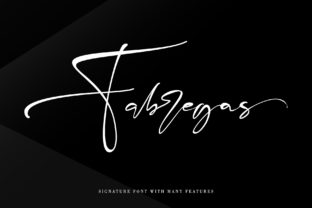
Fabregas: A Natural Handwritten Signature Font
Imagine typing a name—and watching it flow like ink from a fountain pen. That’s Fabregas: a handwritten signature font designed to mimic the rhythm, tilt, and subtle variation of real cursive handwriting. It’s not just decorative script; it’s crafted with natural entry and exit strokes, gentle inconsistencies, and a relaxed, confident cadence. No robotic uniformity—just authenticity you can type.
Why “Handwritten” Matters More Than You Think
A signature font isn’t just for wedding invites or logos. It’s a quiet signal: this is personal, intentional, human. Fabregas leans into that feeling—not by imitating calligraphy tools, but by capturing how people actually write their names when they’re not trying to impress. That makes it useful across contexts where warmth, trust, or individuality matter more than formality.
For Beginners: Simplicity Without Sacrifice
If you’ve never installed a font before—or only use system defaults—Fabregas is refreshingly straightforward. It works in any app that supports OpenType fonts (Word, Google Docs, Canva, Figma, Adobe Express). No plugins. No tutorials. Just download, install, and type. There’s no learning curve to “master” a style—you get expressive results instantly. For someone designing their first business card or personal website banner, that immediacy removes friction without compromising visual appeal.
For Educators & Coaches: Building Connection Through Tone
Teachers sending digital handouts, life coaches drafting welcome emails, or university staff preparing orientation materials often need to balance professionalism with approachability. Fabregas fits neatly there: it feels personal but not childish, warm but not casual. One literacy tutor uses it for student feedback headers—“Great work, Maya!”—so the praise feels handwritten, not automated. That small shift increases perceived care and engagement, especially in remote or asynchronous settings.
For Small Business Owners & Freelancers
Your logo, email signature, or social media banner is often the first thing a potential client sees. Fabregas gives solo entrepreneurs—photographers, bakers, therapists, consultants—a way to reflect their voice visually, even before a word is read. A freelance graphic designer might pair it with a clean sans-serif for contrast: her name in Fabregas, her tagline in Inter. No need for custom lettering or a branding budget. It’s cost-free to try, low-risk to test, and high-impact in conveying sincerity.
For Creators & Content Makers
Bloggers, podcasters, and Instagram creators rely on consistent visual identity. Fabregas shines in thumbnails, quote graphics, and episode title cards—especially when the message is reflective, heartfelt, or story-driven. A memoir writer uses it for chapter titles in her self-published ebook; a mental health creator applies it to Instagram carousel text overlays (“You’re allowed to pause”). In both cases, the font quietly reinforces tone—without competing with content.
What You’re Not Getting (and Why That’s Okay)
Fabregas isn’t a full script family with alternates, ligatures, or swashes. It doesn’t include bold or italic variants. It’s intentionally focused: one weight, one style, optimized for names and short phrases—not body text or multi-line paragraphs. That narrow scope is its strength. If you need versatility across dozens of languages or complex typographic control, this isn’t the tool. But if your goal is to make a name feel like it was written by hand—not drawn, not animated, not filtered—that focus delivers clarity, not compromise.
Designers & Brand Professionals: When to Reach For (or Past) Fabregas
Experienced designers appreciate Fabregas as a reliable starting point—not a final solution. They might use it for mood boards, client presentations, or rapid prototyping, knowing it conveys “handwritten elegance” quickly. Some layer it over custom-drawn signatures later; others keep it as-is for brands prioritizing accessibility and fast iteration. Its OpenType compatibility means it renders consistently across devices, which matters when clients preview assets on mobile or share files across platforms.
Consumers & Hobbyists: Joy in the Details
For people making greeting cards, framing family recipes, or personalizing gifts, Fabregas adds polish without pressure. A parent used it to label jars of homemade jam—“Lily’s Blackberry,” typed once, printed, and stuck on glass. No tracing. No scanning. No shaky freehand. It felt handmade, but required no skill beyond typing. That blend of ease and charm is why hobbyists return to it season after season—for holiday tags, baby shower banners, or framed quotes above a desk.
How to Know If Fabregas Fits Your Project
Ask yourself:
- Is this for a name, monogram, or short phrase? (Yes → strong fit.)
- Do you want it to feel personal, not polished? (Yes → Fabregas aligns.)
- Are you working in apps that support standard font files? (Yes → seamless use.)
- Do you need multilingual support, extensive weights, or paragraph-level styling? (No → consider alternatives.)
It won’t replace a custom logotype for an enterprise brand—but it might be exactly what a yoga studio needs for its newsletter header, or what a student needs for a thesis dedication page. Its value lies in restraint: doing one thing well, so you don’t have to overthink it.
A Note on Licensing & Use
Fabregas is free for personal and commercial use—no attribution required. That matters whether you’re selling prints on Etsy, launching a Shopify store, or designing a nonprofit’s annual report. You’re free to embed it in PDFs, use it in video titles, or apply it to merchandise. Just avoid modifying the font file itself (e.g., altering glyphs or redistributing altered versions), and you’re covered.
Final Thought: Tools Should Serve Your Voice, Not Shape It
Fabregas doesn’t ask you to become a calligrapher. It doesn’t demand design expertise or expensive software. It simply offers a way to let your name—or your client’s, your student’s, your community’s—appear with the quiet confidence of something written by hand. Whether you’re typing your first blog post or your thousandth client proposal, that small sense of authenticity can resonate longer than any trend.