Sarllina: A Bold Decorative Font for High-Impact Typography
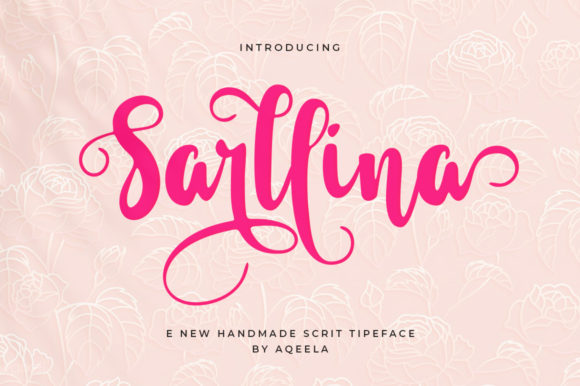
Sarllina is a decorative display typeface distinguished by its dramatic swashes, high-contrast letterforms, and assertive visual presence. Designed for short-form, attention-grabbing applications—such as logos, headlines, posters, and packaging—it prioritizes expressive impact over extended readability. Its bold decorative letters are crafted with intentional flair: extended terminals, fluid flourishes, and strong vertical stress that lend each character a sense of movement and authority.
Unlike versatile workhorse fonts intended for body text or UI interfaces, Sarllina operates in a specialized niche. It functions best where typography serves as a focal point—not background support. Users typically encounter it when seeking a font that communicates confidence, elegance, or artistic distinction without relying on imagery alone.
Why Designers Consider Sarllina
Designers explore Sarllina when they need to solve specific visual communication challenges. These include:
- Creating a distinctive brand mark or logotype that stands out in competitive markets;
- Designing editorial covers or event posters where hierarchy and emotion drive engagement;
- Adding typographic personality to luxury product labels, fashion campaigns, or boutique identities;
- Complementing minimalist layouts with a single, strong typographic accent.
Its swashes are not merely ornamental—they’re functional tools for rhythm and flow. When used selectively (e.g., in initial capitals or word endings), they guide the eye and reinforce tone. This makes Sarllina especially relevant for projects where voice and visual identity must align tightly.
Practical Benefits and Realistic Expectations
The primary benefit of Sarllina lies in its memorability. Its bold decorative letters create immediate visual recognition, reducing reliance on secondary graphic elements. For branding initiatives targeting premium or creative audiences, this can strengthen recall and perceived value.
However, those benefits come with clear constraints. Sarllina is not optimized for legibility at small sizes or in long passages. Its intricate details—especially in swash variants—lose clarity below ~24pt in print or ~32px on screen. Kerning may require manual adjustment for certain letter combinations, and variable font features (e.g., optical sizing or weight axes) are not part of its current design scope.
Users should also anticipate limited language support. While Sarllina covers Latin-based scripts—including basic diacritics for Western European languages—it does not extend to Cyrillic, Greek, or non-Latin writing systems. Projects requiring multilingual typesetting will need supplemental fonts or custom extensions.
When Sarllina Is a Strong Fit
Sarllina excels in contexts where typography functions as deliberate, intentional statement-making. Examples include:
- A cosmetics brand launching a limited-edition line, using Sarllina for the product name on packaging and hero banners;
- An independent publisher designing a literary fiction cover, where the title’s typographic weight conveys thematic gravity;
- A wedding invitation suite where script-like elegance and custom swashes enhance formality and personalization;
- A gallery exhibition title treatment, where large-scale wall text must command space without competing visuals.
In these cases, Sarllina supports strategic goals: differentiation, emotional resonance, and visual cohesion. Its effectiveness increases when paired with ample whitespace, restrained color palettes, and supporting typefaces with neutral contrast—such as a clean sans serif for body copy.
When Alternatives May Be More Appropriate
Sarllina is less suitable when flexibility, scalability, or linguistic breadth are priorities. Consider alternatives if your project involves:
- Responsive web interfaces: Fonts requiring precise hinting, variable weight control, or broad character sets often perform more reliably across devices and browsers;
- Long-form digital content: Even prominent headings benefit from balanced x-heights and open counters—traits more common in contemporary display sans serifs or transitional serifs;
- Multilingual publishing: If your audience spans multiple language groups, fonts like Playfair Display or Trajan Pro offer wider script coverage while retaining decorative strength;
- Brand system scalability: Logos built solely on highly stylized fonts like Sarllina may pose challenges when adapted to app icons, favicons, or social avatars—where simplification often sacrifices key identifying features.
Making an Informed Decision
Evaluating Sarllina requires matching its attributes to concrete project requirements—not aesthetic preference alone. Begin by clarifying your core objective: Is the goal to establish instant visual distinction? To evoke a particular mood (e.g., vintage opulence, modern confidence)? Or to fulfill functional needs like readability or technical compatibility?
Test Sarllina in context before committing. Render sample text at actual usage sizes—both on screen and in print—and assess how it interacts with surrounding elements. Try pairing it with two contrasting supporting fonts (e.g., a geometric sans and a low-contrast serif) to gauge versatility. Review licensing terms carefully: some versions restrict web embedding or commercial redistribution, particularly in SaaS platforms or template marketplaces.
Also consider workflow implications. If your team uses design systems with strict token-based typography rules, Sarllina’s lack of optical size variants or condensed widths may complicate consistent application. Conversely, if you’re working on a one-off campaign with full creative control, its focused scope becomes an advantage—not a limitation.
Finally, compare it against similar fonts—not just by appearance, but by use case alignment. For example, Adornia offers comparable swash energy but with broader language support; Bodoni Moda delivers bold contrast with greater text-friendliness; Recoleta balances decorative detail with improved screen legibility. Each reflects different tradeoffs between expression and utility.
Sarllina is not a universal solution—but for the right application, it provides a precise, impactful tool. Its value emerges not from versatility, but from intentionality: when bold decorative letters and expressive swashes directly serve a communication goal, Sarllina delivers clarity through contrast, and distinction through design.