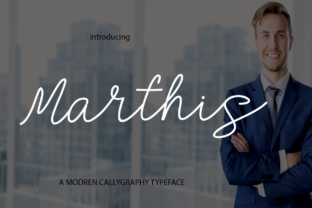
Marthis: A Light, Bold Handwritten Font
Imagine a font that feels like your most confident handwritten note—effortless, expressive, and unmistakably human—but with the presence to hold its own on a book cover, logo lockup, or social media banner. That’s Marthis: a light and charming handwritten font with a bold feel. It doesn’t shout; it resonates. And because it balances delicacy with visual weight, it works where many script fonts falter—on screen, at small sizes, and alongside clean sans-serifs.
Why Marthis Fits Real Creative Work (Not Just Decoration)
Handwritten fonts often fall into one of two traps: they’re either too fragile to scale or too ornate to read. Marthis avoids both. Its letterforms have gentle contrast, open counters, and consistent spacing—features that emerge from thoughtful design, not algorithmic flourish. That means when you use Marthis for a workshop handout, an email header, or a product label, readers absorb meaning first, aesthetics second.
For example, a freelance educator building a course landing page might pair Marthis for section titles with a neutral sans-serif like Inter or Open Sans for body text. The result? Warmth without distraction. The headline feels personal and inviting, while the supporting text remains clear and accessible. No extra design decisions needed—just intentional hierarchy.
Where Marthis Adds Quiet Impact
It shines in contexts where authenticity matters more than formality—and where legibility can’t be compromised:
- Small business branding: A local ceramicist uses Marthis for her studio name on packaging and Instagram bios. The font reflects her hands-on process without leaning into clichéd “artisan” tropes. Customers sense craft—not just decoration.
- Digital course materials: An online instructor applies Marthis to worksheet headers and module names. Because the letters are distinct—even at 18px—it guides learners visually without demanding attention. Students scan faster, retain structure better.
- Editorial accents: A newsletter writer sets pull quotes in Marthis against a serif body font. The contrast is subtle but effective: the quote feels spoken, not typeset. Readers pause, then keep reading.
What ties these together isn’t novelty—it’s function. Marthis supports communication by reinforcing voice, not obscuring it.
Who Benefits Most—and Why Timing Matters
Professionals who juggle multiple roles—like solopreneurs launching their first website or educators designing classroom resources—often lack time to experiment endlessly with typography. Marthis reduces decision fatigue. Its contemporary vibe feels current without being trend-dependent, and its built-in rhythm means less manual kerning or tracking adjustment.
That said, Marthis isn’t meant for dense paragraphs or data tables. It’s not a replacement for a workhorse text face. Think of it as a trusted collaborator: best used where tone, identity, or emphasis need reinforcement—not where neutrality or speed of reading is the priority.
Bloggers drafting long-form posts may find Marthis ideal for intro lines or subheadings but will want to switch to a highly readable body font after the first sentence. Similarly, marketers running A/B tests on email subject lines might test Marthis against a clean sans-serif—not because one is “better,” but because each signals something different about brand personality.
Pairing Marthis Thoughtfully (Without Overcomplicating)
Good pairing starts with contrast—not opposition. Marthis has warmth and movement, so it pairs naturally with typefaces that offer structure and stillness. Try it with:
- Geometric sans-serifs (e.g., Montserrat, Poppins) for modern balance—ideal for tech-adjacent brands or creative agencies wanting approachability without softness.
- Low-contrast serifs (e.g., Merriweather, Lora) for editorial depth—great for authors, publishers, or educators aiming for quiet authority.
- Monospaced fonts (e.g., Space Grotesk, IBM Plex Mono) for unexpected tension—useful in developer documentation or creative portfolios where clarity meets character.
Avoid pairing Marthis with other handwritten or brush-script fonts. The effect becomes muddy, not layered. Likewise, steer clear of high-contrast serifs (like Bodoni) unless you’re deliberately going for dramatic editorial contrast—and even then, reserve Marthis for single-line uses only.
Practical Tips for Getting Started
You don’t need design expertise to use Marthis well. Start simple:
- Use it for one thing only per layout: a logo, a headline, or a call-to-action button—not all three. Let it breathe.
- Test readability early: View your design on a phone screen at 75% zoom. If letterforms blur or merge, reduce usage or increase size.
- Check licensing before publishing: Marthis includes web font files and desktop licenses, but usage rights vary by platform and distribution method. Small business owners embedding it in client-facing PDFs should confirm coverage; bloggers using it in Canva templates should verify export permissions.
One underrated strength of Marthis is how forgiving it is of imperfect implementation. Unlike tightly spaced scripts that collapse at smaller sizes, Marthis maintains integrity down to 14px in interface elements—making it viable for mobile navigation labels or app UI headings, provided contrast and background meet accessibility standards.
When to Consider Alternatives
Marthis excels in light-to-medium weight applications, but if your project requires strong visual hierarchy across multiple font weights (e.g., bold headlines + medium subheads + light captions), you’ll need a family with expanded variants—or plan to supplement with a compatible sans-serif. It also lacks extensive language support beyond Latin-based scripts, so multilingual publishers should review glyph coverage before committing.
And while its charm is undeniable, Marthis may feel too gentle for industries where assertiveness is part of the message—think legal firms, cybersecurity platforms, or industrial equipment brands. In those cases, a sharper script or structured display font may align more closely with audience expectations.
Still, for creators who value sincerity over slickness—and who know that typography is rarely about “pretty” but about purpose—Marthis offers something rare: confidence wrapped in warmth. It doesn’t ask you to perform. It invites you to speak clearly, stay grounded, and let your voice come through—without translation.