Runway: The Editorial Serif That Elevates Fashion Design
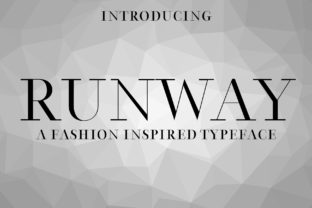
When a font doesn’t just sit on the page—but commands attention, sets tone, and whispers sophistication—designers take notice. Runway is one such typeface: a meticulously crafted serif with an unmistakable editorial rhythm, built for clarity, elegance, and quiet authority. Its name isn’t metaphorical—it’s designed to walk the line between timeless tradition and contemporary refinement, much like a well-curated fashion runway.
What Makes Runway Stand Out?
At first glance, Runway feels familiar—its high-contrast strokes, generous x-height, and open apertures echo the legibility of classic newspaper serifs. But look closer: subtle flares at terminal points, balanced ink traps, and carefully tuned letter spacing reveal its modern sensibility. It’s not a revival—it’s a reinterpretation. Designed with extended Latin support and thoughtful OpenType features (including small caps, old-style figures, and discretionary ligatures), Runway handles both dense body text and bold display settings with equal grace.
Unlike many decorative serifs, Runway avoids excess. There’s no forced drama—just confident structure, consistent rhythm, and visual harmony across weights. Its family typically includes six weights (from Light to Black), each with matching italics that retain character without sacrificing readability. This versatility makes it unusually adaptable—not just for headlines, but for captions, pull quotes, product descriptions, and even long-form editorial layouts.
Where Runway Fits Best (and Where It Might Not)
Runway thrives where intentionality matters: fashion editorials, luxury brand identities, boutique e-commerce sites, art book typography, and high-end packaging. Its editorial DNA means it performs exceptionally well in contexts where storytelling, mood, and audience trust are central.
- Fashion & Lifestyle Brands: A seasonal lookbook, campaign microsite, or Instagram carousel benefits from Runway’s ability to balance hierarchy and warmth—pairing effortlessly with minimalist photography or textured visuals.
- Publishing & Digital Magazines: Whether used for article titles, bylines, or section headers, Runway supports scannability while preserving voice—ideal for digital-first publications covering design, culture, or sustainable style.
- Creative Portfolios & Studio Websites: Designers, photographers, and stylists often choose Runway to signal craftsmanship and discernment—without needing to explain why.
- Print Collateral: From invitation suites to limited-run zines, its robust hinting and print-optimized metrics ensure crisp rendering at any size—even on uncoated paper.
That said, Runway isn’t a universal solution. Its editorial temperament means it may feel overly formal for playful, youth-oriented, or tech-forward brands. It’s less suited for UI interfaces (like buttons or form labels) where ultra-legibility at tiny sizes is non-negotiable—or for environments demanding extreme language coverage (e.g., full Cyrillic or Arabic support). If your project prioritizes neutrality over personality, or needs maximum functional flexibility across dozens of scripts, consider pairing Runway with a clean sans-serif for contrast rather than relying on it alone.
A Sustainable Apparel Brand Launches Its First Lookbook
The team wanted typography that reflected their values: considered, human-centered, and quietly confident. They used Runway Bold for section headers, Runway Regular Italic for model credits, and Runway Light for descriptive captions beneath imagery. The result? A cohesive visual narrative that felt intentional—not trendy—and aged gracefully across web and print formats.
An Independent Fashion Magazine Redesigns Its Digital Presence
After testing several serif options, editors chose Runway for its exceptional screen readability at 18–22px body sizes. Its generous counters and open forms reduced eye strain during longer reads—especially important for mobile users scrolling through interviews and trend analyses. Small caps were leveraged for subheadings; old-style numerals added nuance to date stamps and statistics.
A Boutique Jewelry Designer Updates Her E-Commerce Site
She replaced a generic serif with Runway Medium for product names and Runway Light Italic for material details (“18k recycled gold,” “hand-set moonstone”). The shift elevated perceived value without changing imagery or pricing—proof that typography can quietly influence perception and trust.
How to Evaluate If Runway Is Right for Your Project
Before licensing or implementing Runway, ask yourself three practical questions:
- What’s the dominant tone you want to convey? If your brand voice leans toward authoritative, refined, or culturally grounded—rather than energetic, disruptive, or utilitarian—Runway is likely aligned.
- Where will this typeface appear most often? Review your top five usage scenarios: homepage headline? Product tags? Email subject lines? Blog excerpts? Test Runway in those exact contexts—not just as a sample paragraph. Does it hold up at 14px on mobile? Does it pair naturally with your current sans-serif or accent font?
- Who’s reading—and what are they doing? A fashion newsletter subscriber scanning for inspiration responds differently than a shopper comparing specs. Runway excels when readers are *engaging*, not just *converting*. If your primary goal is rapid comprehension (e.g., safety instructions or shipping policies), lean on its lighter weights with ample line height—or reserve it for secondary text only.
Also consider technical fit: Does your CMS or platform support variable fonts or advanced OpenType features? While Runway works beautifully as static files, unlocking its full potential—like optical sizing or contextual alternates—requires compatible environments. Most modern frameworks do, but legacy systems may limit expressive range.
Pairing Runway Thoughtfully
Typography isn’t solo—it’s relational. Runway pairs best with typefaces that respect its editorial gravity without competing. Try these approaches:
- With a Humanist Sans-Serif: Fonts like FF Meta, Proxima Nova, or Inter offer friendly contrast—clean enough to frame Runway’s serifs without feeling sterile.
- With a Monospace for Code or Labels: In developer-facing fashion tools (e.g., a custom CMS for stylist teams), Runway + IBM Plex Mono creates a smart, readable hierarchy.
- With Hand-Drawn Accents—Sparingly: A single illustrated icon or signature script element can add warmth beside Runway’s precision—but avoid overloading. Let the serif breathe.
One final note: Runway gains strength through restraint. Using all six weights across one page can dilute impact. Instead, define clear typographic roles—e.g., “Bold = section titles only,” “Light Italic = attribution”—and stick to them. Consistency builds recognition faster than variety ever could.
Final Thoughts: More Than Just a Font
Runway is more than a collection of glyphs. It’s a design decision—one that signals care, context-awareness, and respect for the reader’s time and attention. It won’t fix weak content or poor layout, but in the right hands, it amplifies clarity, deepens resonance, and quietly reinforces brand integrity.
If your work lives at the intersection of aesthetics and meaning—if you’re crafting experiences where how something looks is inseparable from how it’s understood—then Runway deserves serious consideration. Not because it’s new or flashy, but because it’s resolved: confident in its purpose, precise in its execution, and enduring in its appeal.
Explore Runway’s official specimen site to test weights interactively, review licensing options, and download trial files. And remember: the best font choice isn’t the most impressive one—it’s the one that helps your message land, every time.