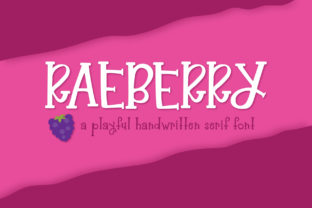
Raeberry: A Charming Hand-Drawn Serif Font
Imagine opening a design project and instantly feeling inspired—not because of flashy tools or complex settings, but because the very first letter you type looks warm, friendly, and full of personality. That’s the quiet magic of Raeberry. It’s not a high-tech variable font or a minimalist sans-serif built for screens—it’s a carefully crafted, hand-drawn serif with gentle curves, subtle irregularities, and a soft, approachable charm.
At its core, Raeberry is designed to bring humanity back into typography. Each character carries the light, confident touch of an illustrator’s pen—slight variations in stroke weight, delicate serifs that taper like ink drying on paper, and spacing that breathes naturally rather than enforcing rigid grids. It doesn’t shout. It invites. And because it’s a serif font with hand-drawn warmth, it bridges tradition and playfulness in a way few typefaces do.
Why Designers and Creators Reach for Raeberry
People choose Raeberry when they want their work to feel intentional *and* heartfelt—not polished to the point of sterility. It’s especially helpful when tone matters as much as content: a small business owner launching a handmade soap line, a teacher designing classroom posters, or a blogger sharing cozy lifestyle tips. In those moments, typography isn’t just about legibility—it’s about signaling care, authenticity, and warmth.
Raeberry supports goals like building trust through visual consistency, standing out in crowded digital feeds, or making printed materials feel special without needing expensive illustrations. Unlike fonts that rely on novelty alone, Raeberry earns attention by feeling familiar—like handwriting you’d see in a thoughtful note—but refined enough for professional use.
Where Raeberry Fits Naturally
You’ll find Raeberry thriving in places where personality meets purpose:
- Branding for small creative businesses—think café menus, boutique packaging, or artisanal product labels where every detail reflects craftsmanship.
- Educational materials—handouts, worksheets, or presentation slides that need to feel welcoming, especially for younger learners or wellness-focused workshops.
- Digital content with heart—Instagram carousels, Pinterest graphics, or email headers where clean readability pairs beautifully with expressive charm.
- Personal projects—wedding invitations, baby announcements, or journal covers where emotional resonance matters more than trendiness.
It works well at medium to large sizes—headings, quotes, titles, and short blocks of text shine most. Because of its hand-drawn nature, it’s less ideal for dense body copy or tiny interface labels, but that’s not its job. Raeberry isn’t trying to replace your system font—it’s here to add voice where voice matters most.
Real-Life Uses You Can Try Today
A freelance graphic designer used Raeberry for a local florist’s seasonal newsletter—pairing it with soft pastel photography and ample white space. The result felt seasonal, sincere, and distinctly *theirs*. No stock templates, no overused fonts—just one thoughtful choice that anchored the whole visual identity.
Another example: a homeschooling parent created printable reading logs for her kids using Raeberry for section headers and motivational phrases (“You’re doing great!” “Keep turning pages!”). The hand-drawn quality made the logs feel encouraging rather than clinical—and the kids looked forward to filling them out.
Even simple swaps make a difference. Try replacing the default heading font in your next Canva social post with Raeberry. Or use it for the title slide in your next workshop deck. You’ll notice how quickly the mood shifts—from generic to grounded, from functional to friendly.
What to Keep in Mind Before Using Raeberry
Raeberry is delightful—but like any expressive typeface, it shines brightest when used intentionally. Here are a few practical things to consider:
- Pair it thoughtfully. Its personality means it pairs best with neutral, clean fonts (like a modest sans-serif) for contrast and balance. Avoid pairing it with other highly decorative or script fonts—that can create visual noise instead of harmony.
- Test readability early. While Raeberry is clear at larger sizes, preview how it renders on different devices and screen types—especially if used in web headers or mobile graphics. Some hand-drawn details soften or blur at smaller sizes.
- Check licensing for your use case. Raeberry is typically offered with personal and commercial licenses. If you’re using it for client work, merchandise, or digital products, confirm the license covers your intended scope. Most reputable sellers provide clear guidance—look for terms around “web embedding,” “app usage,” or “unlimited projects.”
- Don’t force it everywhere. Its strength lies in contrast and intention. Using Raeberry for every headline, button, and caption dilutes its impact. Let it lead where it adds meaning—then step back and let simpler fonts support the rest.
A Font That Grows With Your Ideas
Raeberry doesn’t require design expertise to appreciate—or use. You don’t need to adjust kerning by hand or master OpenType features to get value from it. What it does ask for is a little attention: noticing where warmth matters, where distinction helps, and where a human touch makes your message land differently.
That’s why educators use it to soften academic material, entrepreneurs use it to differentiate their brand voice, and hobbyists use it to elevate everyday creativity—not because it’s trendy, but because it feels right. It’s the kind of font that quietly supports your intent, rather than competing with it.
If you’ve ever hesitated before choosing a font—wondering whether something feels “too stiff” or “too busy”—Raeberry offers a gentle, confident middle path. It’s proof that thoughtful design doesn’t always mean complex tools or advanced skills. Sometimes, it starts with picking one typeface that simply makes your idea feel more like you.
And when your design idea feels more like you? That’s when it truly stands out.