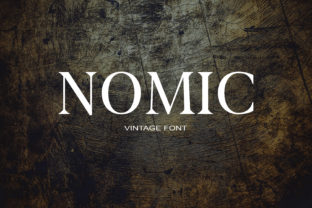
Nomic: Urban Charm, Bold Typography
Nomic isn’t just another display font—it’s a deliberate fusion of city energy and typographic clarity. Designed with tight spacing, confident stroke contrast, and subtly tapered terminals, it carries the rhythm of sidewalk chalk, subway posters, and independent café signage—without sacrificing legibility or versatility. It’s the kind of typeface that feels instantly familiar yet refreshingly distinct: urban without being gritty, bold without being aggressive, expressive without sacrificing function.
What Makes Nomic Stand Out
At its core, Nomic balances two often-competing priorities: visual impact and readability. Its uppercase letters have strong vertical emphasis and compact proportions—ideal for headlines, logos, and interface elements where space is limited but presence matters. Lowercase characters retain personality through gentle curves and open apertures, ensuring body text remains approachable at medium sizes (16–24px). Unlike many “urban” fonts that rely on distressed textures or exaggerated geometry, Nomic achieves character through proportion, weight distribution, and intentional asymmetry—like a well-worn brick facade that’s been maintained, not abandoned.
This restraint makes Nomic unusually adaptable. It doesn’t shout to be noticed; it earns attention by holding it. That’s why designers reach for it when they need authority *and* approachability—whether launching a neighborhood bookstore’s identity or designing a SaaS dashboard header that must feel both trustworthy and human.
Creative Applications Across Real Projects
Here’s where Nomic shines—not in theory, but in practice:
- Branding for local businesses: A coffee roaster in Portland used Nomic’s bold caps for their bag labels and paired it with a neutral sans-serif for ingredient lists. The contrast gave warmth and structure—no illustration needed.
- Digital interfaces: A wellness app replaced generic system fonts in its navigation bar with Nomic Regular (not Bold) at 18px. Users reported the interface felt “more intentional,” and engagement metrics rose slightly—likely because visual hierarchy became clearer at a glance.
- Educational materials: A community literacy nonprofit used Nomic for section headers in downloadable workbooks. Teachers noted students navigated content faster, attributing it to the font’s clear letterforms—especially helpful for readers with dyslexia or low vision.
- Editorial design: An indie magazine applied Nomic to pull quotes and issue titles, then set feature articles in a highly legible serif. The pairing created breathing room between voice and information—making tone and substance equally visible.
How Different Users Can Adapt Nomic Thoughtfully
You don’t need to be a typographer to use Nomic well. What matters is matching its strengths to your goal—and knowing when *not* to use it.
Designers can treat Nomic as a structural anchor: define one primary weight (e.g., Medium) for all headlines and CTAs, then lock line height and letter spacing in design systems. Avoid mixing more than two weights—Nomic’s voice is strongest when consistent, not layered.
Marketers and small business owners benefit most when using Nomic for assets that live outside their website: social banners, email headers, printed flyers. Its compact width means more text fits in Instagram story templates or Google Ads headlines—without shrinking font size or sacrificing clarity.
Bloggers and educators should reserve Nomic for moments of emphasis—not paragraphs. Try it for lesson objectives (“You’ll learn how to…”) or blog post subheads that signal a pivot in logic or tone. Pair it with a generous, open-line-height body font (like Inter or Source Sans Pro) to avoid visual fatigue.
Freelancers and creators can build client trust by explaining *why* Nomic fits—not just that it looks good. For example: “We chose Nomic because its clean geometry supports your brand’s focus on transparency, while its subtle warmth keeps communication friendly.” That kind of reasoning shows intention, not trend-chasing.
Practical Tips for Clarity and Consistency
Even great fonts falter without thoughtful implementation. Here’s how to keep Nomic effective:
- Limit usage scope. Use it for no more than two typographic roles—e.g., headings + buttons, or logo + section dividers. Overuse dilutes its impact and confuses hierarchy.
- Respect its scale. Nomic performs best between 18px and 48px on screen, and 10pt–24pt in print. Below that, details blur; above that, its compactness can feel cramped without adjusted tracking.
- Adjust tracking deliberately. Default letter spacing is tight—ideal for headlines—but add 20–40 units of tracking for all-caps navigation or short labels. Never auto-kern or rely on browser defaults.
- Test color contrast rigorously. Its medium weight works reliably against light or dark backgrounds—but avoid thin gray-on-white or yellow-on-light-beige. Use WCAG-compliant contrast checkers, especially for accessibility-focused projects.
Staying Original While Using Nomic
Using a popular font doesn’t mean blending in—it means working smarter within shared tools. Originality comes from *how* you combine, crop, animate, or contextualize Nomic—not from avoiding it.
Try these grounded approaches:
- Layer Nomic over photography with a subtle drop shadow—just enough to lift it off busy backgrounds without looking artificial.
- Use it exclusively in black or deep charcoal, then introduce color only in supporting elements (icons, borders, bullets). The restraint makes color feel purposeful.
- In motion graphics, animate Nomic text with staggered opacity—revealing letters left-to-right—to emphasize pacing and intent, not speed.
- For print, pair Nomic with uncoated paper stock. Its crisp edges gain tactile softness, bridging digital precision and analog warmth.
None of these require custom code or licensing upgrades—just attention to context and audience need.
Final Thought: Type as Tool, Not Trophy
Nomic delivers urban charm and bold looks because it was built for real work—not just mood boards. It’s the font you choose when you want your message to land clearly, respectfully, and memorably—whether you’re naming a podcast, designing a workshop slide deck, or updating your freelance portfolio.
The most effective typography doesn’t distract. It clarifies. It supports. It stays out of the way—until it’s time to be seen. That’s Nomic’s quiet strength: it knows when to lead, and when to listen.