Harlane: A Strategic Choice for Distinctive Visual Communication
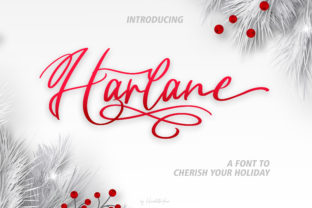
Harlane is a script font built on flowing curves—elegant, organic, and intentionally expressive. It’s not merely decorative; it’s a typographic tool with distinct communicative weight. When chosen deliberately, Harlane conveys warmth, craftsmanship, and human-centered attention. When applied without alignment to purpose or audience, it risks undermining clarity, credibility, or consistency. The difference lies not in the font itself—but in how thoughtfully you integrate it into your broader communication strategy.
Why Harlane Works Where Other Scripts Don’t
Unlike many script fonts that prioritize flourish over function, Harlane balances legibility with personality. Its letterforms maintain generous spacing, moderate contrast, and consistent rhythm—traits that support readability at medium sizes (16–24px) in digital interfaces and print collateral. That makes it viable—not just viable, but strategic—in contexts where tone matters as much as information: brand storytelling, invitation design, premium product packaging, educator-led course materials, or founder-authored newsletters.
Its strength isn’t universality. It’s specificity. Harlane signals intention: “This message was crafted, not automated.” That resonance supports goals like building trust with discerning audiences, differentiating from algorithm-driven competitors, or reinforcing a values-based positioning (e.g., artisanal, mindful, relationship-first).
When Harlane Adds Real Value—and When It Doesn’t
Harlane excels in controlled, high-intent applications:
- Brand voice reinforcement: Used sparingly in logos, subheadings, or signature lines for businesses centered on personal service—think boutique coaching practices, independent book publishers, ceramic studios, or wellness retreats.
- Emotional anchoring: In email headers or landing page hero sections where the first impression must evoke calm, care, or creativity—especially when paired with a clean sans-serif body font for balance.
- Print-first experiences: Wedding stationery, limited-run zines, certificate designs, or classroom posters where tactile quality and human touch are part of the value proposition.
It falters—or backfires—in situations demanding neutrality, speed, or scalability: legal disclaimers, data dashboards, mobile navigation labels, multi-language interfaces, or any environment where users scan quickly or rely on assistive technology. Harlane’s charm is contextual. Apply it where attention is invited—not demanded.
How to Plan Your Use of Harlane Intentionally
Start with outcome, not aesthetics. Ask: What do I want the reader to feel, remember, or do after encountering this text? If the answer involves warmth, authenticity, or distinction—Harlane may be appropriate. If the goal is speed, precision, or broad accessibility, choose otherwise.
Then map usage to hierarchy and frequency:
- Primary application: One consistent use case—e.g., only in logo lockups or only as a pull-quote font across all blog posts.
- Secondary application: A supporting role—e.g., chapter titles in an e-book, but never body text or captions.
- Exclusion zones: Define hard limits—no Harlane in forms, error messages, pricing tables, or social media avatars.
This approach prevents visual fatigue and preserves Harlane’s impact. Overuse dilutes its meaning; restraint sharpens it.
Risks of Using Harlane Without Strategy
The most common misstep isn’t technical—it’s conceptual. Teams adopt Harlane because it “feels nice,” then deploy it across slide decks, invoices, and app UIs without evaluating whether that feeling serves their goals. The result? Inconsistent brand perception, reduced scannability, and unintended barriers for readers with dyslexia or low vision.
Harlane also carries subtle expectations. Its elegance implies time, care, and resources. If your operational reality doesn’t match—say, slow response times, generic templates, or inconsistent customer service—the font can amplify dissonance rather than harmony. It doesn’t lie, but it highlights gaps between promise and delivery.
Another underappreciated risk: licensing and technical fit. Harlane is a commercial font. Using it on public websites without proper web font licensing may expose you to compliance issues. And while it renders well in modern browsers, it lacks extensive language support—so avoid it for multilingual content unless verified.
Practical Integration Tips for Real Workflows
For marketers: Test Harlane in A/B variants of email subject lines or CTA buttons. Track open rates *and* reply sentiment—not just clicks. Its effect is often qualitative: Does the tone invite conversation, or does it distance?
For educators: Use Harlane in handouts that celebrate student work—certificates, poetry anthologies, or reflection prompts. Avoid it in rubrics or syllabi where clarity and neutrality matter more than atmosphere.
For freelancers and small business owners: Embed Harlane in your proposal cover page or testimonial section—but pair it with a highly legible body font like Inter or Lato. This signals professionalism *and* personality without sacrificing function.
For developers and designers: Load Harlane as a @font-face declaration with fallbacks. Never rely on system fonts to approximate its style. And always test contrast ratios—its lighter weights may fall below WCAG AA standards on light backgrounds.
Long-Term Positioning: How Harlane Fits Into Sustainable Branding
Brands evolve. Tools like Harlane should support that evolution—not anchor you to a moment. Consider how Harlane scales with growth: Will it still feel authentic if your team expands from three to thirty? If your audience shifts from local creatives to enterprise clients? If your offerings move from handmade goods to SaaS tools?
Strong branding isn’t about locking in one aesthetic—it’s about defining principles that guide choices like font selection. If your principle is “human-scale clarity,” Harlane fits well in early stages. If it’s “scalable precision,” it likely won’t.
Also consider longevity in design systems. Harlane works best when treated as a *variable accent*, not a foundation. Build your system around robust, accessible core fonts—and reserve Harlane for moments where deviation serves a documented strategic aim.
Making Better Decisions With Harlane
You don’t need to love Harlane. You do need to understand what it communicates—and whether that aligns with your current goals. That requires stepping back from visual preference and asking practical questions:
- Does this use case benefit from perceived warmth—or require perceived authority?
- Will this appear where users are scanning, or where they’re pausing to reflect?
- Do we have the design discipline to limit its use—or will it spread unpredictably across touchpoints?
- Have we tested it with real users, not just internal stakeholders?
Harlane doesn’t replace strategy. It expresses it—clearly, or confusingly. The font reveals how deeply you’ve considered your audience’s needs, your own capacity for consistency, and the actual outcomes you’re trying to achieve.
So before you apply Harlane to your next project, pause. Not to admire its curves—but to clarify your intent. Because the most effective typography isn’t the prettiest. It’s the most truthful.