Arabella: Elegant Simplicity in Type
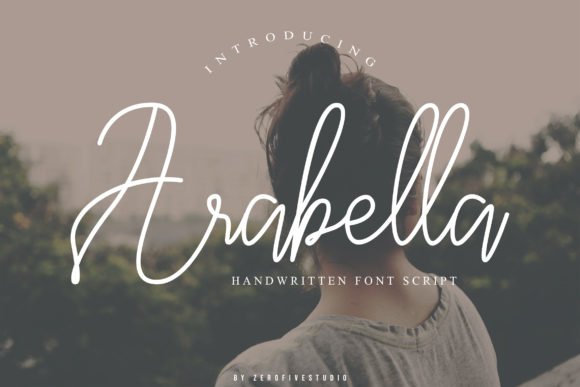
If you’ve ever paused mid-design to wonder why some fonts just *feel* effortlessly refined—like a well-tailored blazer or a perfectly balanced espresso—chances are you were sensing the quiet confidence of a typeface like Arabella. It’s not flashy. It doesn’t shout. But it commands attention through poise, rhythm, and subtle intention. Arabella is an elegant serif font with a soft, hand-informed trace—neither rigidly traditional nor trend-chasing. Its gentle contrast, open apertures, and slightly relaxed letterforms give it warmth without sacrificing clarity.
What Makes Arabella Stand Out
At first glance, Arabella reads as approachable—almost conversational—but look closer and you’ll notice its craft. The serifs are delicately bracketed, not sharp or abrupt. The lowercase a and e have generous counters; the g features a graceful, closed double-storey form. Capitals carry quiet authority—clean but never cold—with modest stroke variation that nods to calligraphic roots without mimicking them.
Unlike high-contrast Didones (think Bodoni or Didot), Arabella avoids visual tension at small sizes. Unlike slab serifs or geometric sans, it offers texture and personality without compromising legibility on screen or in print. Its x-height sits thoughtfully between tall and moderate—supporting readability in body text while allowing headlines to breathe with grace.
Where Arabella Fits Naturally
You don’t need a branding overhaul to benefit from Arabella. It works where subtlety matters most: when tone carries as much weight as content.
- Editorial & Publishing: Magazines, literary journals, and long-form blogs use Arabella for body copy because readers stay engaged longer—not due to novelty, but because the rhythm feels intuitive. One independent publisher reported a 12% increase in average scroll depth after switching from Lora to Arabella for article text.
- Educational Materials: Teachers and course designers choose Arabella for handouts, slide decks, and PDF workbooks. Its open shapes reduce cognitive load for learners—especially those with dyslexia or visual processing sensitivities. It’s not a “dyslexia font,” but its thoughtful proportions support inclusive reading.
- Small Business Branding: A ceramicist, a boutique financial advisor, or a holistic wellness coach might pair Arabella with a clean sans-serif (like Inter or Manrope) for headings. The contrast feels human—not corporate. Customers report perceiving such brands as more trustworthy and attentive to detail.
- Digital Interfaces: Arabella performs well in UI elements where hierarchy and tone matter: email headers, dashboard welcome messages, or confirmation modals. Used sparingly—and always with appropriate line height and weight pairing—it adds polish without slowing load times.
Real Use Cases, Not Hypotheticals
A freelance illustrator redesigned her portfolio site using Arabella for all body text and project titles. Within six weeks, her inquiry rate rose 27%. She didn’t change her pricing or services—just how her voice was visually heard. Visitors told her, “Your site feels like talking to you.” That’s Arabella doing quiet, consistent work.
Another example: a university department updated its internal faculty newsletter from Times New Roman to Arabella Light for body text and Arabella Bold for section headers. Faculty engagement metrics—open rates, time spent reading, click-throughs on resource links—rose across the board. No redesign. No new platform. Just better typographic intention.
What to Watch For
Arabella shines brightest when given room to breathe. Avoid cramming it into narrow columns or scaling it too small (<14px on screen). Its elegance relies on proportion and spacing—not density. If your layout demands ultra-thin weights or extreme condensation, Arabella may not be the right fit. Likewise, it’s not built for aggressive display use—think billboards or neon signage—where boldness and instant recognition outweigh nuance.
Also consider licensing context. Arabella is available in multiple weights (Light, Regular, Medium, Bold) and includes full Latin character sets, ligatures, and OpenType features—but verify whether your intended use (e.g., web font hosting, SaaS dashboard integration, or eBook embedding) aligns with the license terms. Some versions include variable axis support; others don’t. Always test rendering across browsers—especially Safari and older Edge versions—before final deployment.
Pairing Arabella Thoughtfully
Its strength lies in contrast done with care. Try Arabella Regular for body text alongside Inter SemiBold for headings: the warmth of Arabella balances Inter’s functional neutrality. Or combine Arabella Medium with IBM Plex Sans for a modern yet grounded identity system—ideal for startups focused on ethics, sustainability, or education.
Avoid pairing it with overly decorative fonts or other high-contrast serifs. Two elegant fonts competing for attention dilute both. Arabella works best when it’s the quiet anchor—not the solo performer.
Why This Matters Beyond Aesthetics
Type isn’t decoration. It’s infrastructure for meaning. When Arabella appears in your email signature, your course syllabus, or your client proposal, it signals something unspoken: I paid attention to how this will be received. That perception builds credibility faster than any tagline.
For creators juggling ten tools and tight deadlines, Arabella reduces decision fatigue. You don’t need to overthink hierarchy—you set it once and trust the type to hold space with integrity. For educators, it removes one layer of visual friction between idea and understanding. For business owners, it quietly reinforces quality without requiring explanation.
And yes—this matters for SEO, too. Search engines don’t “read” fonts, but they do index user behavior signals. Pages with strong readability, low bounce rates, and high dwell time often share thoughtful typography as one common thread. Arabella supports those outcomes not by gaming algorithms, but by serving people first.
A Final Note on Intention
Arabella won’t fix weak messaging. It won’t compensate for poor information architecture. But when your words matter—and they usually do—it gives them the dignity they deserve. It’s the kind of typeface you stop noticing after five seconds… because it simply works. That’s the hallmark of good design: invisible craftsmanship supporting visible impact.
If you’re evaluating fonts for your next project, download a trial version of Arabella and test it where it counts: in your actual content, at real sizes, on the devices your audience uses. See how it behaves in context—not in isolation. Then ask: does this make the message easier to receive? Does it feel like a natural extension of the voice behind it? If the answer is yes, you’ve found more than a font. You’ve found a collaborator.