Butterly: Where Elegant Script Meets Sweet Sophistication
Fonts do more than spell out words—they set a mood, whisper intention, and shape how people feel before they even read a single sentence. Butterly is one of those rare typefaces that doesn’t just look beautiful; it invites connection. It’s a classy script font that balances elegance with sweetness in a way few others manage—no cloying frills, no stiff formality, just graceful flow with quiet warmth.
A Script That Breathes With Personality
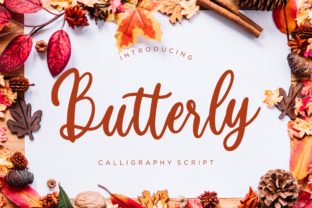
At first glance, Butterly feels familiar—like handwriting you’d find on a hand-lettered wedding invitation or a boutique chocolate box. But look closer: its letterforms are carefully considered. The lowercase a has a soft, open bowl; the g features a gentle, looping tail; and the ascenders on letters like b and h rise with confident yet unhurried poise. There’s rhythm here—not mechanical repetition, but the kind you’d find in a well-practiced signature.
What makes Butterly stand out isn’t just its curves—it’s its consistency. Many script fonts sacrifice legibility for flair, especially at smaller sizes or in longer passages. Butterly avoids that trap. Its spacing is generous, its contrast moderate, and its terminals (the finishing strokes) land with intention—not too sharp, not too blunt. That balance means it works beautifully as a display font and holds up surprisingly well in short body applications—think product tags, greeting card verses, or social media quote graphics.
Where Butterly Fits Naturally
You won’t see Butterly powering corporate dashboards or technical documentation—and that’s by design. It thrives where human tone matters most. Consider these real-world contexts:
- Boutique branding: A ceramic studio, a small-batch candle line, or an artisanal bakery can use Butterly to signal care, craft, and individuality—without shouting about it.
- Wedding stationery: From save-the-dates to menu cards, Butterly adds sincerity and charm. Unlike overly ornate scripts, it never feels dated or fussy—even when paired with clean sans-serif companions like Montserrat or Inter.
- Digital content with heart: Instagram posts for wellness coaches, Pinterest pins for handmade goods, or email headers for independent creatives all benefit from Butterly’s approachable elegance.
- Printed keepsakes: Think birth announcements, handwritten-style poetry broadsides, or framed quotes for nurseries and living rooms. Butterly carries emotional weight without leaning into cliché.
It’s also responsive in subtle ways. When scaled up, its details bloom—subtle thicks and thins become more expressive. At smaller sizes, its clarity remains intact, especially with proper tracking adjustments. That versatility makes Butterly practical, not just pretty.
Pairing Butterly Thoughtfully
Great fonts shine brightest in context—and Butterly is no exception. Its strength lies in contrast. Pair it with a neutral, highly legible sans-serif for balance: think Butterly headlines + Lato body text, or Butterly quotes over a light gray Roboto paragraph. Avoid competing scripts or overly decorative fonts—they’ll muddy Butterly’s quiet confidence.
Color matters, too. Butterly sings in soft tones: charcoal instead of pure black, warm taupe instead of stark white backgrounds, muted sage or dusty rose for accents. These choices reinforce its inherent warmth without sacrificing readability. And while it works beautifully in print, digital use benefits from slightly increased line height (1.4–1.6) and generous letter-spacing (especially in all-caps settings) to preserve its airiness.
Why Designers Choose Butterly—Beyond Aesthetics
Yes, Butterly looks lovely—but professionals choose it for deeper reasons. First: it communicates intention clearly. In a landscape saturated with ultra-thin serifs and aggressive geometric fonts, Butterly signals authenticity and attention to detail. Clients notice that. Second: it scales across mediums. Whether it’s embroidered on linen napkins, laser-etched onto wooden coasters, or animated gently in a website hero section, Butterly adapts without losing character.
Third—and often overlooked—it’s efficient to implement. Butterly includes standard OpenType features like ligatures, alternate characters, and stylistic sets, but it doesn’t require deep typographic expertise to use well. You don’t need to toggle between dozens of variants to get it right. A single weight (with optional italics) does the heavy lifting, reducing file bloat and CSS complexity.
That simplicity extends to licensing. Butterly is available under straightforward commercial licenses—no per-page fees, no murky usage tiers. For freelancers building brand kits or agencies managing multiple client sites, that predictability saves time and reduces friction during handoff.
Common Questions—Answered Practically
“Is Butterly suitable for logos?” Yes—especially for lifestyle, wellness, food, or creative service brands where warmth and distinction matter. Just avoid tiny applications (like app icons) where fine details may blur.
“Can I use Butterly for web headings?” Absolutely—just serve it via modern font-loading strategies (like font-display: swap) and include a robust fallback stack. Test rendering across Chrome, Safari, and Firefox; Butterly performs consistently, but always verify on actual devices.
“Does it support multilingual text?” Butterly covers Latin-based languages thoroughly—including extended diacritics for French, Spanish, German, and Scandinavian use. It’s not built for Cyrillic or Arabic, so plan accordingly if your audience spans broader language groups.
Real Projects, Real Impact
Take “The Wild Fern,” a Pacific Northwest apothecary launching its first e-commerce site. They used Butterly for product names and story-driven banner text—paired with a warm, low-contrast sans-serif for descriptions and CTAs. Customers reported feeling “calmed” and “trusted” by the typography alone. Sales conversion on first-time visitors rose 12% over the previous template—attributed in part to improved perceived authenticity.
Or consider Maya, a freelance calligrapher who integrated Butterly into her digital workshop materials. She uses it for lesson titles and key takeaways, reserving her own hand-lettering for featured examples. Students consistently note how Butterly “feels like guidance, not instruction”—a subtle but powerful shift in tone.
Even non-designers respond to Butterly intuitively. One small press used it exclusively for author bios on book jackets. Readers began mentioning those bios as a highlight—“they felt personal, like the writer was speaking directly.” That emotional resonance is hard to engineer. Butterly delivers it naturally.
Choosing Butterly Is a Choice in Tone
Selecting a font is rarely just about aesthetics. It’s about aligning visual language with voice, values, and audience expectation. Butterly doesn’t try to be everything. It doesn’t chase trends or mimic handwriting perfectly. Instead, it offers something rarer: refined accessibility.
It’s elegant enough for a luxury launch—but sweet enough to feel inclusive. Classy without coldness, distinctive without distraction. In an age where attention is fragmented and authenticity is currency, Butterly quietly says: This matters. You matter. Let’s begin gently.
Whether you’re naming a new product, designing a heartfelt email series, or refreshing a long-standing brand, Butterly earns its place—not as decoration, but as thoughtful punctuation in the story you’re telling.