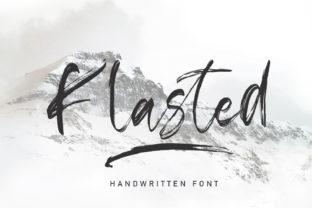
Klasted: A Raw, Adventurous Brush Script for Authentic Creative Expression
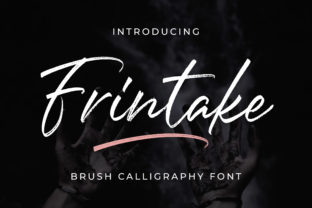
Klasted isn’t designed for polished corporate decks or sterile landing pages. It’s a raw, adventurous, and bold brush script font—crafted to mirror the energy, rhythm, and organic imperfection of strong handwriting. Its thick-to-thin strokes, deliberate inconsistencies, and tactile texture make it feel human first, digital second. That distinction matters—not as a stylistic footnote, but as a functional cue. When you choose Klasted, you’re not just selecting a typeface; you’re signaling intent, tone, and context before a single word is read.
Where Klasted Fits in Real Workflows
Fonts don’t operate in isolation—they’re embedded in decisions about messaging, audience alignment, brand voice, and production timing. Klasted thrives where authenticity outweighs uniformity: hand-lettered book covers, expressive editorial headlines, artisanal product labels, workshop posters, personal branding assets, and campaign visuals built around storytelling rather than scalability.
It rarely belongs in long-form body text, multi-page reports, or interface UI—but that doesn’t limit its utility. Instead, it excels at strategic emphasis: anchoring a visual hierarchy, reinforcing emotional resonance, or distinguishing a signature element within a broader system. Think of it less as a default and more as a deliberate punctuation mark—a pause, an accent, a gesture made visible.
Using Klasted Before a Project Begins
Before opening design software or writing copy, consider how Klasted informs your framing. If you’re launching a small-batch ceramics line, sketching packaging concepts, or drafting a manifesto for a new teaching method, naming Klasted early helps clarify tone. Does “bold and organic” match the values you want customers or students to feel? If yes, using Klasted in mood boards, pitch decks, or early wireframes keeps that intention anchored—not as decoration, but as a constraint that sharpens choices.
This pre-project use also reveals compatibility gaps early. For example, pairing Klasted with a crisp sans-serif like Inter or Lato creates contrast that feels intentional—not chaotic. But pairing it with another high-contrast script or overly decorative serif can dilute impact. Testing pairings during discovery saves revision time later.
Integrating Klasted During Execution
When Klasted enters active production—whether in Adobe Illustrator, Figma, or Canva—two practical considerations dominate: spacing and substitution.
- Letter-spacing matters more than usual. Klasted’s natural flow relies on rhythm, not rigid tracking. Tighten spacing slightly for headlines (–20 to –40 units in most apps), but avoid over-compression—it kills legibility and undermines its organic feel.
- Use OpenType features deliberately. Klasted includes alternate glyphs, swashes, and contextual ligatures. Enable them selectively—not globally. A single swash on the first letter of a title adds flair; applying them to every word reads as cluttered, not confident.
Also consider output context. If your final asset will be printed on textured paper or screen-printed on tote bags, Klasted’s rough edges translate beautifully. But if it’s destined for low-resolution email banners or tiny mobile app icons, scale and contrast become critical—you may need to simplify or rework outlines manually to preserve clarity.
How Klasted Interacts With Other Tools and Assets
Klasted doesn’t replace tools—it complements them. In content planning, it pairs well with frameworks like the Brand Voice Chart or Messaging Ladder: define your core adjectives first (“adventurous,” “grounded,” “unfiltered”), then test whether Klasted visually delivers on them. In collaborative environments, share a style guide snippet showing approved uses (e.g., “Klasted only for primary headlines and logo lockups—never for captions or data labels”) to prevent drift.
For developers integrating Klasted into websites, use variable font files if available—or serve it via a reliable font host with fallbacks. Never rely solely on system fonts when Klasted’s character is central to perception. And always test rendering across browsers: Safari sometimes handles brush scripts differently than Chrome or Firefox, especially with anti-aliasing turned off.
Practical Implementation Tips for Consistent Use
Consistency with Klasted isn’t about repetition—it’s about restraint and recognition. Here’s how experienced users maintain quality without overthinking:
- Define one primary use case per project. Is it for your podcast logo? Your workshop title slide? Your Instagram story highlight icon? Pick one anchor point—and build outward from there.
- Create reusable templates. Save Figma frames or Illustrator artboards with properly spaced, kerned Klasted headings. Reuse them instead of re-justifying every time—this preserves rhythm and avoids accidental distortion.
- Export smartly. For logos or icons, convert Klasted to outlines before final export. This prevents font substitution errors and ensures fidelity across platforms—even if the recipient doesn’t own the font.
- Check contrast early and often. Klasted’s thick strokes absorb light differently than geometric fonts. Run automated contrast checkers (like WebAIM’s) on any text placed over imagery or color blocks—don’t assume readability.
Long-Term Usability and Evolution
Klasted holds up well over time—not because it’s trendy, but because its strength lies in specificity. Unlike neutral fonts that fade into background, Klasted makes a statement that either fits or doesn’t. That means it ages gracefully when used with discipline: a 2022 event poster using Klasted still feels current in 2025 because its authenticity isn’t tied to a moment—it’s tied to craft.
Still, revisit usage annually. Ask: Does this still reflect who we are? Has our audience shifted? Are we overusing it as shorthand instead of meaning? A quick audit—comparing current assets to original intent—keeps integration intentional, not habitual.
Workflow Integration That Feels Natural
For educators designing course materials, Klasted works best on section dividers or reflection prompts—not syllabus tables. For freelancers building client brands, it’s strongest in logotype exploration, not invoice templates. For bloggers, it elevates newsletter headers or quote graphics—not RSS feed previews.
The key is matching Klasted’s inherent qualities to functional needs: where you need warmth, immediacy, or tactile presence—not neutrality or speed. That alignment reduces friction. You won’t spend time justifying why it “feels right”—you’ll spend time refining how it serves the goal.
What to Avoid—So You Keep Momentum
Avoid forcing Klasted into roles it wasn’t built for. Don’t use it for:
- Body copy—even at 16px. Its variability slows reading speed and increases cognitive load.
- Small UI elements like buttons or form labels. Legibility suffers below ~24px without significant customization.
- Automated systems that lack glyph substitution control (e.g., basic CMS editors). You’ll lose swashes, alternates, and proper kerning.
- Brands prioritizing global scalability over local resonance. Klasted communicates best with audiences who value craft, individuality, and expressive risk.
None of these are flaws—they’re boundaries. Recognizing them lets you deploy Klasted with precision instead of hoping it adapts.
Making It Yours—Without Overcomplicating
You don’t need a full typography system to use Klasted well. Start small: apply it to one recurring asset—your email signature, your workshop certificate, your podcast intro graphic. Refine that single use until it feels unmistakably aligned. Then expand—if needed.
That approach builds confidence, not confusion. It turns Klasted from a “cool font I found” into a calibrated tool—one that supports your process instead of interrupting it. Because at its best, Klasted doesn’t draw attention to itself. It draws attention to what matters most: the idea, the person, the moment—made vivid by the right kind of boldness.